
Numerical Models in Groundwater Pollution
Product details
| Management number | 231926711 | Release Date | 2026/06/18 | List Price | US$29.42 | Model Number | 231926711 | ||
|---|---|---|---|---|---|---|---|---|---|
| Category | |||||||||
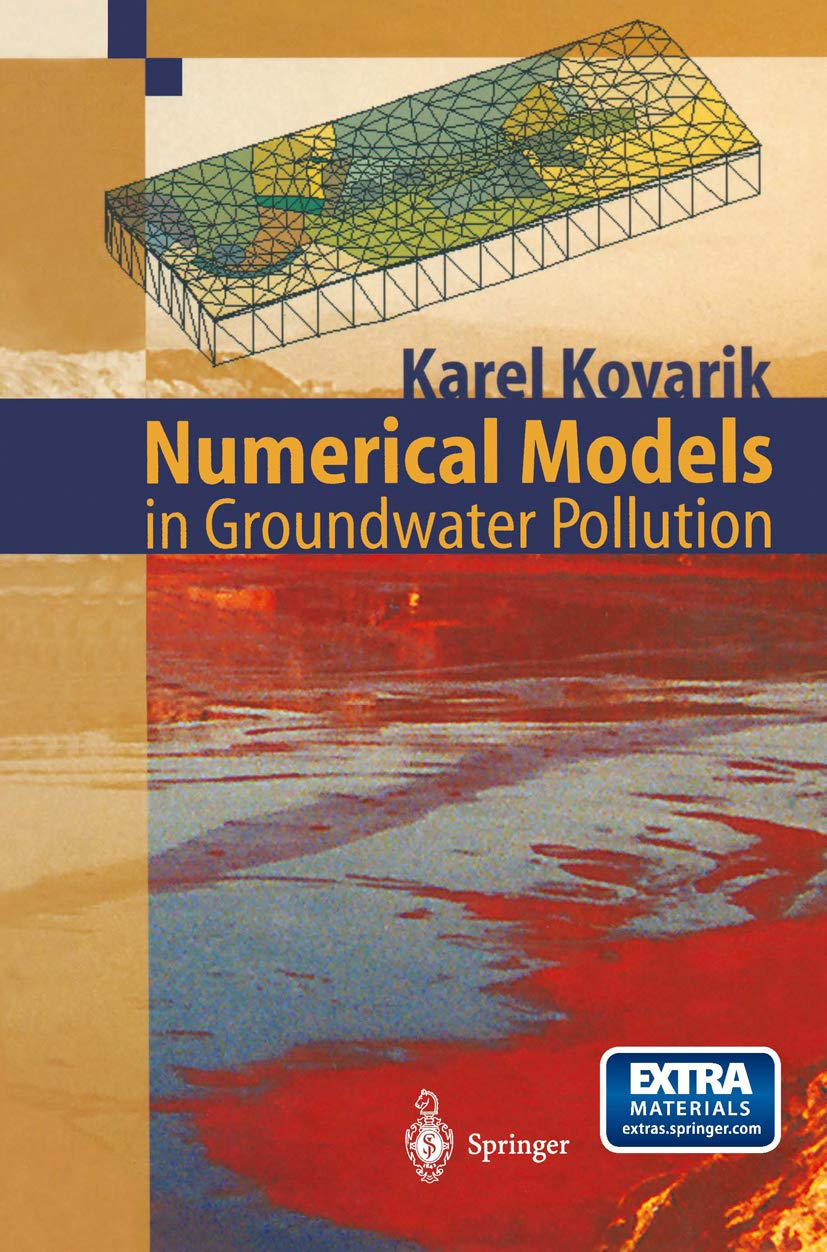
Mathematical models are the effective tool to solve different tasks predicting pollutant movement. The finite difference method is the oldest, but still remains widely used in hydrogeological practice. However, this method is not very useful to construct the new transport models because it cannot approximate the shape of remediation elements exactly. Therefore the book is concerned with the FEM (Finite Element Method) and BEM (Boundary Element Method), and also with the comparison of advantages of these methods in groundwater hydrology. The combination of the BEM and the random-walk particle tracking method, which seems to be a very useful tool to model the spread of pollution in groundwater, are also presented. The computer programmes have been developed on the basis of the theoretical backgrounds of these methods. They use the Visual C++ programming language for Windows 95/NT platform and will be included in the book. Read more
| ASIN | B001934M1A |
|---|---|
| XRay | Not Enabled |
| ISBN13 | 978-3642569821 |
| Edition | 2000th |
| Language | English |
| File size | 13.1 MB |
| Page Flip | Enabled |
| Publisher | Springer |
| Word Wise | Enabled |
| Print length | 218 pages |
| Accessibility | Learn more |
| Screen Reader | Supported |
| Publication date | December 6, 2012 |
| Enhanced typesetting | Enabled |
Bestseller ranking
Moringa


Customers who viewed this product also viewed
Hydrology





Correction of product information
If you notice any omissions or errors in the product information on this page, please use the correction request form below.
Correction Request Form